.jpg "Stereoscopic Microscope 1")
Name:Stereoscopic Microscope
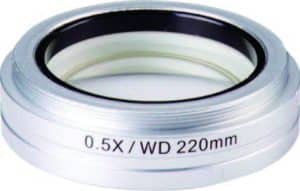
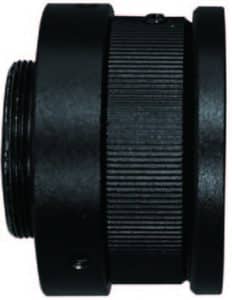
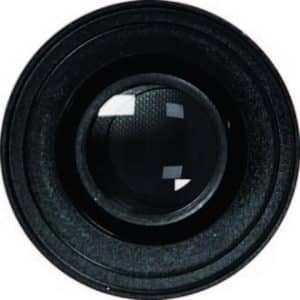
Objective Lens:1x, 0.63x, 2x
Eyepiece:10x/16x/40x
Optical Magnification: 7.8~160x
Stereo Angle:12°~15°
Application:Biology, medicine, industrial inspection, gemology, teaching and research
The stereoscopic microscope, also known as a stereo microscope or binocular microscope, is an optical microscope capable of providing three-dimensional visual perception. Its core principle involves two independent optical paths that simulate binocular vision, enabling observers to obtain stereoscopic images with depth perception. This microscope typically features a long working distance and large depth of field, facilitating direct observation and precise manipulation of physical samples, such as dissection, assembly, or inspection. It offers a wide range of magnification but is generally suited for medium to low magnification observations. The stereoscopic microscope is widely used in various fields, including biology, medicine, industrial inspection, jewelry appraisal, and teaching research.
-300x225.jpg "Stereoscopic Microscope 2")
Development history of stereomicroscopes
The history can be traced back to the 17th century. In 1677, Chérubin d’Orléans was inspired by predecessors and applied the principle of binocular telescopes to the design of microscopes, allowing both eyes to simultaneously observe micro objects. In 1832, British physicist Charles Wheatstone first described the principle of stereoscopic vision. In 1853, John Leonhard Riddle proposed a binocular microscope with a single objective lens and prism system. Around 1890, American biologist Horatio S. Greenough proposed a design principle that is still adopted by all major optical instrument manufacturers today. Stereoscopic microscopes based on the “Greenoff principle” can provide high-quality, realistic stereoscopic images. In the mid-19th century, Ernst Abbe’s theory of image formation provided a scientific basis for the design and manufacture of high-performance stereomicroscopes.
In the mid-20th century, modern stereomicroscopes were born. In 1957, the American optical company introduced the Cycloptic stereomicroscope based on the principle of a shared main objective lens (CMO). In 1959, Bausch&Lomb introduced the first stereo zoom microscope. In the 1960s, Japanese manufacturers such as Nikon and Olympus began producing continuous zoom stereomicroscopes. Subsequently, stereo microscopes combined with computer technology developed features such as high numerical aperture objectives, large zoom ratios, and ergonomic design. In 2009, the Chinese national standard “Stereoscopic Microscopes Part 2: High Performance Stereoscopic Microscopes” was revised and released.
 Working Principle
The core principle of a stereomicroscope is the dual light path design, which simulates the binocular vision of the human eye to produce a sense of three dimensionality. It has two completely independent optical systems ,left optical path and right optical path, corresponding to the left and right eyes of the observer, observing the sample from slightly different directions at a angle called the “body view” or “convergence angle”. Due to the different perspectives of the left and right light paths, there is a slight disparity in the images formed on the sample. When the observer’s left and right eyes receive these two slightly different images, the brain will automatically fuse them, resulting in three-dimensional stereoscopic vision.
Most modern stereomicroscopes use the Galilean Zoom System, which allows for continuous and smooth changes in magnification by rotating the zoom handle without the need to replace the objective lens. Illuminating methods include. transmission lighting and reflection lighting. The transmission lighting is located below the stage, and the light passes through the sample, suitable for thinner and semi transparent samples; The reflection illumination is located above the objective lens, and the light shines on the surface of the sample from above, suitable for opaque or surface detail observation.
The working principle of a stereomicroscope is based on the principles of light refraction, reflection, and lens imaging. Some high-end models use FusionOptics fusion optical technology to optimize the stereoscopic imaging effect by separating the left and right eye imaging light paths.
Product Model and Features
The mainstream stereomicroscope brands in the market include Olympus, Leica, and Nikon, which offer a full range of products covering teaching, industrial testing, and high-end scientific research.
Olympus’ product line covers a wide range. For example, the SZ61 model adopts the Grino optical system, providing a 6.7:1 zoom ratio and ergonomic design, suitable for teaching and industrial inspection. As the flagship model, SZX16 has a 16.4:1 ultra wide zoom ratio and high resolution, and supports fluorescence imaging, mainly used in high-end scientific research fields. The SZX7 adopts the Galileo optical system, with a 7:1 zoom ratio, and integrates a universal reflective/transmissive LED lighting base and digital camera interface, which is also suitable for industrial inspection.
Leica is renowned for its advanced optical technology. The EZ4W model integrates a 3-megapixel digital camera system, providing a continuous zoom ratio of 4.4:1 and multi interface output. Ivesta 3 adopts FusionOptics fusion optical technology to achieve a 9:1 large zoom ratio and modular design, and supports intelligent software. The high-end model M205 C also uses FusionOptics technology, with a zoom ratio of up to 20.5:1 and a resolution of 1050 lp/mm.
Nikon has launched the innovative AZ100 multifunctional zoom microscope concept. It adopts a single tube zoom optical system, with an observation magnification between 5 and 500 , and features a unique dual focusing system for the tube and stage, suitable for scenes that require high-resolution observation and planar size measurement in macro areas.
Mikrosize as a new brand international market, is in provides a rich product line of stereomicroscopes, mainly serving fields such as industrial testing and teaching.
-150x150.jpg)